Gas Boilers Section

Reduce Soaring Domestic Gas Bills With A Zenex GasSaver

Wednesday, October 19th, 2011

 Reduce Soaring Domestic Gas Bills With A Zenex GasSaver The latest solution to deal with current dramatically rising gas bills is now available from Zenex with their GasSaver, an energy saving device, which reduces the gas consumption required for domestic hot water by up to 40%!

The Zenex GasSaver is a boiler flue attachment that recovers heat from the waste combustion gases normally lost, and uses it to pre-heat the domestic hot water supply.

It is installed on top of a standard gas boiler as part of the flue-way and recycles heat from the waste gas.

Chris Farrell, Managing Director at Zenex Technologies said: “With all of the big six energy providers raising their prices in the last months by up to 19%, millions of Britons face a huge increase in their gas bills. Many consumers are desperate for proven money-saving solutions that will reduce their soaring expenditures.”

“The Zenex GasSaver is a device that is easy to install, has no moving parts, is silent, and does not require any electricity or gas to operate. The device recovers heat from the flue gases and helps the boiler deliver hot water much faster to the tap, reducing the need to run lukewarm water down the drain, saving both water and energy consumption.”

With average gas consumption bills of £850 per household, the Zenex GasSaver can reduce the bills by up to £220 per year.

The patented GasSaver has been independently tested by the Building Research Establishment and added to their list of approved energy saving devices.

The Zenex GasSaver is priced around £500 and is a highly cost-effective addition to a new boiler installation.

It is sold under licence by the boiler manufacturers, Baxi and Alpha, as the Baxi MultiFit GasSaver and Alpha GasSaver.

The GasSaver is also recognised under the Government’s SAP scheme and can be used to count towards the energy rating of a dwelling. These energy savings, can also help a dwelling reach the various standards under the Code For Sustainable Homes.

For more details and a full technical specification of The Zenex GasSaver, please visit the website.

Baxi’s New Range Of Intelligent Central Heating Boilers

Monday, October 3rd, 2011

 Baxi’s New Range Of Intelligent Central Heating BoilersThis year Baxi launched their latest range of combi and system boilers, which all come with the THINK combustion management system, the cutting edge in boiler technology.

The great new range includes:

The brand new Baxi Neta-tec Combi - compact dimensions make this the perfect choice for homes where space may be limited

The Baxi Duo-tec – with additional features that made this award-winning original so popular, increasing energy efficiency and reliability.

The Megaflo System Compact – now with cupboard fit; this boiler is compatible with the Baxi Solarflo solar thermal range, making it a great system boiler for the future.

The THINK Combustion Management System.

  • Gas adaptive control: continually monitors the air and gas coming in and adjusts to make sure the burner in your boiler is always working at maximum efficiency. This means you always get the heat you are paying for, for the lifetime of your boiler.
  • Wide modulation range: this means that your boiler works at 100% when you need the most heat, but as your home warms up, it turns itself right down so that the temperature you have set is maintained without the boiler switching itself on and off.
  • Less gas is used as a result and, consequently, lower fuel bills. It also means that your boiler doesn’t have to work so hard, so there’s less wear and tear on its parts, making it much more reliable.
  • Also, because you’re not using so much gas, your carbon footprint is smaller too!
  • Automatic set up: All the new Baxi boilers are suitable for both natural gas and LPG. When fitted by your installer , the boiler recognises the gas type and adapts itself accordingly, making it much easier and quicker to install.

The Benefits: Baxi boilers are now quicker to install, helping you to save more on your fuel bills.
Offer lifetime combustion efficiency and set a new benchmark in reliability.

For further information about Baxi’s latest central heating boilers, please visit the website.

Cut Cost And Boost Performance Of Your Central Heating

Saturday, August 6th, 2011

 Cut Cost And Boost Performance Of Your Central Heating
The UK launch of the unique Oxyvent Tank, will be great news for homeowners eager to cut heating costs in the home.

This pioneering new tank, which is small enough to fit into an airing cupboard, cuts fuel use, heating bills and carbon emissions, whilst heating a home more efficiently.

It will even solve common domestic heating problems and reduce maintenance costs, in any of the 22 million homes in the UK with a water-based heating system – new or old.

Paul Worswick, Oxyvent Director, said: “Colder winters and rising heating bills mean people want products that will drive down heating bills, but they also want to make sure they feel the benefit of the heating they do pay for.”

What does the Oxyvent tank do?

  • It forces radiators to radiate more heat out into the centre of a room so homeowners get the benefit of the heat, not the walls or ceilings as happens with conventional systems.
  • It imposes boiler temperatures to be set at 60 degrees (65 degrees when heating water), using much less fuel thus cutting the cost of heating bills.
  • It increases the efficiency of condensing boilers as the cooler water running through the system, means the boiler will be in condensing mode a lot more of the time, saving more fuel and money.
  • It makes hot water flow around the central heating system much faster, which fixes problems such as odd radiators in a home that don’t work or radiators with cold areas.
  • It takes the air out of a central heating system, so there is no need to bleed radiators and it also radically reduces corrosion in radiators, reducing the build up of sludge and reducing the need for power flushing.
  • When an Oxyvent Tank is installed with a condensing boiler, the savings and efficiencies are significantly increased compared to a standard boiler installation.

How much energy and money does it really save?
Following thousands of installs in Ireland, where the Oxyvent patented technology was invented, testing by Trinity College Dublin found that people felt 30% more comfortable in a room heated by a boiler with an Oxyvent tank installed set to 63 degrees, than when the boiler was set to 74 degrees prior to installation.

Taking an energy bill of £1200, £684 of this goes on heating space in your home (57% according to DECC energy trends 2009). With energy providers announcing price rises of up to 18%, homeowners could see this rise to £807.
Installs to date show the Oxyvent could save up to 30% on energy bills, so a house with an Oxyvent tank installed would see the central heating portion of their bill drop to £565. That’s an overall saving of £242.

Launch price of £495 RRP exc. VAT if purchased before 1st October 2011. Usual price £560 RRP. exc. VAT.

The Oxyvent tank is available to order online at www.oxyvent.com.

For more detailed information on the Oxyvent central heating tank, please visit the website.
Tel: (01403) 280 164

How To Claim The Feed-in Tariff (FiT)

Thursday, April 7th, 2011

 How To Claim The Feed-in Tariff (FiT) Currently receiving lots of news coverage - Micro-generation is important with regard to carbon reduction.

As the manufacturer of Baxi Ecogen, the maker of the only Dual Energy Boiler available, the company understands that it’s essential to know how to claim the Feed-in Tariff (FiT), to enable you to benefit from the payback as soon as your appliance is installed.

The Feed-in Tariff or FiT is a fixed payment for the electricity you generate in your home, whether you use it yourself or export it into the national electricity grid.
For Baxi Ecogen Dual Energy System the Generation tariff is 10p per kWh.
Export tariff - an additional payment for each kWh you export back to the national grid. For Baxi Ecogen this is 3p per kWh and is index linked.

How to get FiT
Baxi has put together a simple step by step guide to claiming the Feed-in Tariff for the Baxi Ecogen Dual Energy System:

  • Step 1 Check the installer is MCS certified. MCS stands for Microgeneration Certification Scheme. You can find an MCS certified installer on the Baxi website, http://installers.baxi.co.uk/.
  • Step 2 Check that the product is MCS certified. Baxi Ecogen Dual Energy System is MCS certified, making it eligible for the Feed-in Tariff.
  • Step 3 Obtain the MCS certificate from the installer. It needs to be presented to your chosen FiT supplier, so that they can complete the registration process.
  • Step 4 Choose your Feed-in Tariff supplier - you can apply for FiT from your chosen electricity provider. You can either contact your existing provider to discuss the process for claiming FiT, or visit http://www.baxi.co.uk/products/suppliers-who-offer-feed-in-tariff.htm, for details of other providers.
  • You will also need an approved generator meter, which should have been fitted by the installer when your Baxi Ecogen was installed.

Once your electricity provider has processed your application, you will start to receive FiT payments. These will be paid quarterly in arrears and will appear on your electricity bill, and will also include credit for any electricity you have exported.

What is Baxi Ecogen dual energy system?
Baxi Ecogen dual energy system provides efficient gas central heating and hot water and also generates electricity for use in the home.

For more information on Feed-in Tariffs or the Baxi Ecogen dual energy system, please visit the website.

Tel: (0844) 871 1525.

Top 10 Money & Energy Saving Tips By VPhase
Saturday, January 15th, 2011

Top 10 Money & Energy Saving Tips By Vphase With energy prices soaring and temperatures plummeting this winter, now is the perfect time to wise up on the most cost effective changes you could be making within the home.

VPhase has compiled the following Top Ten Money & Energy Saving Tips to help your home, your pocket and the environment in 2011:

1. Domestic Voltage Optimisation
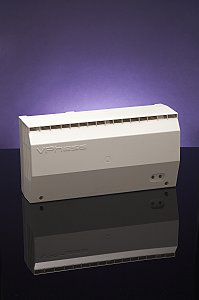
Save energy, CO2 and around 10% off your electricity bills, by installing a VPhase voltage optimisation device.

The unit costs approximately £250 when installed by a qualified electrician and sits next to your fuse box. It’s simply a matter of fit, forget and save instantly! To see how much you can save visit theVPhase website.

2. Energy Saving Light Bulbs
Energy saving light bulbs use 80% less electricity than traditional bulbs and last 10 times as long; by swapping all the light bulbs in your home you could save around £37 per year.

3. Briquette Maker
Recycle unwanted packaging and paper and turn it into a natural and effective alternative to charcoal.

4. Upgrade Home Appliances
Home appliances account for a significant chunk of your household CO2 emissions, so treat yourself by upgrading to Energy Saving Trust recommended home appliances.

5. Turn Down Your Thermostat
Turning your thermostat down by just 1°C could save you around £55 a year.

6. Generate Your Own Electricity
Investing in renewable energy technologies like solar panels, will not only help reduce your CO2 emissions but will also be an added financial benefit for the coming year. Renewable energy technologies are a great investment - especially with government feed-in tariffs now in place.

7. Switch Off
Leaving appliances plugged in and switched on at the socket means they are still using energy.

8. Home Insulation
Did you know around half of heat lost in a typical home is through the walls? Cavity-wall and loft insulation can save you money and make your home warmer and more comfortable.

9. Plug In Energy Meter
Be more aware of how much energy your various electrical appliances consume with an energy meter. You can also check the overall incoming voltage level to your property.

10. Replace Your Boiler
Save up to £225 a year on your heating bills, by replacing an old G-rated boiler with an A-rated condensing boiler.

For more information about energy saving products please visit the VPhase website.


Everest Launches New Energy Business

Thursday, December 16th, 2010

 Everest Launches New Energy Business Everest, one of the UK’s leading home improvement companies, has launched a new business arm, Everest Energy.

The business will initially operate in the Meridian television region across the South of England prior to a national roll-out, and will focus exclusively on selling and installing boilers and central heating systems, solar photovoltaic (PV) panels, which generate cheap green electricity from sunlight, and a selection of other energy efficiency products for the home.

Simon Jarman, Everest’s Managing Director, said: “Everest has been improving homes for many years with its energy efficient windows and we feel that the time is now right to move into energy generation.

As with its home improvements business, Everest Energy will only install the highest quality and most efficient products on the market. It will therefore only fit highly energy efficient ‘A’ rated boilers.

It is estimated that approximately 4 million homes in England are fitted with the least efficient types of boilers, which are potentially costing households hundreds of pounds annually in higher energy bills and are more harmful to the environment.

Everest’s Solar PV panels can save the average household up to 40%5 off a household’s electricity costs, meaning UK households could save up to £5 billion a year collectively – or £186.40 each - on their energy bills by having these panels installed.

In addition, in April 2010 the Government launched the Feed-in Tariff (‘FIT’) scheme, which means that energy suppliers have to make regular payments to householders and communities, who generate their own electricity from renewable or low carbon sources, such as Solar PV or wind turbines.

Homeowners with Solar PV panels can earn 41.3 pence for every kWh produced regardless of whether it is sent back into the grid, which could equate to £1,200 per year or over £30,000 over 25 years with a 2.88kWp system.

The full range of products available from Everest Energy includes:

  • High efficiency boilers; Passive heating monitoring; Solar PV panels;
  • Solar Thermal panels Loft insulation; Cavity wall insulation; Voltage optimisation.

Everest Energy will not be providing an emergency boiler repair service.

For further information on the Everest new energy products, please visit the website.

Tel: (0800) 008 7167

Simple Steps For A More Eco-Friendly Home

Tuesday, November 30th, 2010

 Simple Steps For A More Eco-Friendly HomeAccording to a recent Mintel study, going green and being more eco friendly is becoming a priority in many UK households.
The latest report revealed that almost six in ten adults in the UK aged 25+, claim to be more aware of their effect on the environment, and feel that they have a duty to protect it (2010).

There is no escaping the fact that the way we live our lives is having a big impact on the environment and slowly but surely, people are starting to do what they can, in a bid to combat high energy bills and global warming.

A few simple changes can go a long way and like charity, going green begins at home.

Becoming more eco friendly is mainly down to being more efficient at home and adjusting the way we do things in small steps.

Here are five top tips to help you begin:

1. Conserve energy and electricity use.
One of the easiest ways to save money and decrease your impact on the environment is to reduce your monthly energy usage.

Simple things like turning off all appliances when not in use, changing light bulbs to energy efficient ones and replacing appliances using higher energy.

Fill washing machines and dishwashers to maximum capacity.

2. Heating and hot water
According to Energy Saving Trust UK, boilers account for around 60% of the carbon dioxide emissions in a gas heated home.

By replacing an old G rated boiler with a new high efficiency condensing boiler and improving your heating controls, you will significantly cut your home’s carbon dioxide emissions and save as much as £225 a year.

3. Floor insulation
Insulating under your floorboards will reduce heating bills and improve the comfort of your home. You could save around £50 a year by insulating any type of wood flooring in your home.

Gaps and cracks around floors and skirting boards are easy to fill yourself, with sealant, which could also save you a further £20 a year.

4. Clean green
Stop buying household cleaners that are potentially toxic to both you and the environment.

Check products before purchase and look for eco-friendly ingredients that perform just as effectively.

Brands such as Ecover, offer effective plant based cleaning products for the home. These products are usually biodegradable and don’t harm wildlife if they get into water-courses.

5. Reduce, Reuse and Recycle
Implement the three ‘R’s in your household - by Reducing how much you use, Reusing what you can, and then Recycling the rest.
Excess waste is a huge part of pollution, so doing your best not to create or wrongly dispose of rubbish will definitely help the environment.

For further information about creating an eco-friendlyhome , please visit the websites provided.

http://www.energysavingtrust.org.uk/
http://www.1926woodflooring.co.uk/acatalog/Products_Underlays_167.html
http://www.ecover.com/gb/en/

Baxi Ecogen Launched - Micro-CHP For The Home

Friday, April 2nd, 2010

 Baxi Ecogen Launched - Micro-CHP For The Home Baxi Ecogen is the first, commercially available micro-CHP (Combined Heat and Power) unit for the home.

“Baxi Ecogen heralds the most important step-change for the home heating industry since the condensing boiler” says Mark Kelly, Baxi Group’s CEO. “This is the first, wall-hung micro-CHP unit.

In addition to being available for private homes, it can be specified by local authorities, housing associations and private developers. It will help them meet Level 3 of the Code for Sustainable Homes; tackle fuel poverty issues more effectively and significantly cut carbon emissions. Baxi Ecogen is a unique, world-class technology for the 21st century home”.

  • The appliance’s Free Piston Stirling Engine (FPSE) generates up to 1kWh of electricity, whilst providing abundant supplies of space heating and hot water for the home.
  • The unit responds to an initial heat demand up to 6kW by igniting the engine gas burner. The heat causes the gas inside the FPSE to expand, moving a piston up and down between a copper coil. As a result, electricity is generated in a similar way to an alternator in a car.
  • If the heat demand moves above 6kW, Baxi Ecogen’s supplementary burner fires up to offer an additional 18kW of heat. As the heat demand in the home falls, the appliance’s controls can modulate operation down to 3kW, while still generating electricity to provide maximum energy efficiency.
  • Extensive field trials in over 400 UK homes have shown that Baxi Ecogen units can reliably satisfy up to two thirds of a typical household’s electrical requirements.

For all electricity generated, the householder will receive 10pkWh, using the recently announced Government Feed-In Tariffs (FIT) scheme, effective from April 2010. Any unused electricity can be exported back to the grid for which the householder will receive a further 3pkWh.

Using its many years’ experience as Europe’s premier heating equipment manufacturer, Baxi Group has designed the appliance to be a similar size to a conventional wall-hung domestic boiler. The unit is suitable for use on open vented and sealed systems, making it ideal for straightforward specification and installation within a wide variety of new-build and replacement projects.

Dedicated intelligent Baxi controls can be incorporated into the system, to enhance comfort, increase energy efficiency even further and ensure the unit is suitable for a broad range of property types and sizes.

For further information visit the Baxi Ecogen website.

Tel: (0844) 871 1525

Glow-worm Applauds Boiler Scrappage Scheme

Wednesday, January 6th, 2010

Glow-worm Applauds Boiler Scrappage Scheme The Boiler Scrappage Scheme has moved a step closer to reality following its inclusion in the Pre-Budget Report from Alistair Darling.

Supporters of the campaign ‘Reheat Britain’ say that the scheme, much like the car scrappage scheme, will help households replace costly, inefficient boilers with a grant of £400 to contribute to the replacement costs.

In addition homeowners will save up to £310* a year in fuel bills by replacing a less efficient boiler, which with the additional benefit of the £400 grant makes this proposition even more attractive.

Glow-worm, the leading boiler and heating appliances manufacturer, has been supporting the petition scheme since its launch in 2009.

The decision will now mean that homeowners can receive a £400 incentive to scrap G rated boilers. The scheme is likely to help over 125,000 households a year, when it comes into fruition this year.

Darren Finely, Commercial Director at Glow-worm says: “There is approximately 4 to 4.5 million homes with old style boilers, which are working on efficiencies of around 70%.

Today’s energy efficient SEDBUK A rated boilers can achieve efficiencies of anything up to 90% plus.

Add this to advances in home insulation controls and solar thermal, then there are seriously significant amounts of energy savings for people and direct benefit to the environment.

“The Energy Saving Trust offer a credible list of recommended A rated boilers, including the full A range from Glow-worm, and we would encourage homeowners to consult this list to ensure that they find the right boiler.”

To read about Glow-worm’s continued support of the scheme visit them at: www.needanewboiler.com

*Energy saving and consumption, calculated using DEFRA data for a three bedroom semi-detached house, with an old heavy weight boiler.
Money saving calculated using the British Gas Websaver tariff September 2009.

Five Jobs To Do Before Winter Kicks In

Wednesday, September 23rd, 2009

 Five Jobs To Do Before Winter Kicks In  Your house will soon feel the full force of the British weather again with winter’s wind, rain and snow inevitably on the way.

Here are five jobs for your home that you need to do as soon as possible, to get ready for winter.

1.Service your boiler
Now is the time to check your boiler is in efficient working order so that it doesn’t let you down when you most need it.
Gas Safe Register recommends you get your boiler checked annually by a registered engineer - mainly to protect you and your family from Carbon Monoxide poisoning.

This may be a good time to replace an old boiler for a newer model. Paul Coupe from Northern Gas Heating, nationwide installers of condensing and heating boilers says: “If your boiler is over 10 years old, you could be wasting up to half the gas you buy!

Replacing an old boiler with a new condensing model, can save around a third on your heating bills and it dramatically reduces CO2 emissions too, making it much better for the environment.”

2. Clean out your gutters
With autumn on the way your gutters are liable to be filled with debris such as falling leaves, twigs etc. As they’re designed to direct rainwater away from your house, a faulty gutter can cause water damage, which is expensive to fix.

Gutters should be cleaned out twice a year, once in spring and once in autumn, but if they are directly below trees, this may need to happen more often.

3. Seal draughts to windows and doors
It’s no good having a boiler in tip-top order, if the heat it’s pumping out is leaking through cracks and gaps in your windows and doors.

Around a fifth of heat lost from the home is due to draughts, but this can be fixed simply by locating draughts and sealing them and is a much cheaper solution than replacing old, draughty windows or doors.

Installing draught proofing will save you around £25 and reduce your CO 2 emissions by around 130kg a year. (Depending on the age of your property.)

One important thing to remember, however, is to ensure your property is adequately ventilated; e.g. trickle vents for windows can be closed and opened according to need.

4. Insulate your loft
The Energy Saving Trust reports houses with un-insulated lofts, lose around a quarter of their heat via the roof and this is especially important in winter as your heating bills may literally go through the roof!

There is of course an associated cost, but as your loft insulation will be effective for around 40 years, you will make back the money over time and start reducing CO2 emissions straight away.

5. Inspect your roof and chimney
Your roof is the first point of contact between your house and rainfall or snow, so if your roof is collecting snow for days on end and has weak points, you could end up with some costly leaks.
Now is the time to check that your roof… is weatherproof.

Web: http://www.northerngasheating.com
http://www.energysavingtrust.org.uk/Home-improvements